

From 21 November 2025, India’s labour landscape has been rewritten.
Four consolidated Labour Codes now replace 29 earlier central laws:
- Code on Wages, 2019
- Industrial Relations Code, 2020
- Code on Social Security, 2020
- Occupational Safety, Health and Working Conditions (OSH) Code, 2020 (Ministry of Labour & Employment)
The intent is clear:
simpler laws, more digital records, broader social security, and stronger enforcement. (Ministry of Labour & Employment)

For CHROs and HR leaders, this isn’t just about updating policy PDFs. It’s about:
- Reworking salary structures around a new wage definition
- Bringing gig, platform, and contract workers into a visible system
- Making statutory registers digital and audit-ready
- Aligning HR, payroll, legal, and plant teams around one version of the truth
This guide focuses on action: concrete steps you can take in the next 3–6 months to stay ahead of the New Labour Laws.
Note: This is a practical guide, not legal advice. Please validate specifics with your labour law counsel and refer to official Ministry of Labour & Employment / PIB documents. (Ministry of Labour & Employment)
1. What Has Actually Changed – HR View in 5 Minutes
1.1 Wage definition: the 50% rule
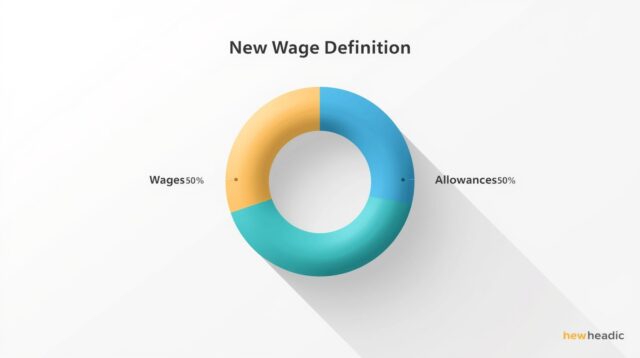
Under the new framework, “wages” include basic pay, dearness allowance and retaining allowance, and these together should be at least 50% of total remuneration. (Upstox – Online Stock and Share Trading)
The immediate impact:
- Allowances can’t be inflated to reduce PF / gratuity bases
- PF, gratuity, bonus, and overtime will often be calculated on a higher wage base
- Many employees will see slightly lower in-hand salary but higher long-term benefits like PF and gratuity (The Times of India)
1.2 Social security: more categories, more visibility
The Code on Social Security consolidates nine earlier laws and explicitly extends coverage to:
- Organised and unorganised workers
- Gig and platform workers
- Contract and fixed-term workers (Press Information Bureau)
Food-delivery and e-commerce platforms, for example, may now need to set aside up to 2% of turnover towards gig worker welfare funds, within prescribed limits. (mint)
1.3 OSH & working conditions: safety, hours, documentation
The OSH Code brings multiple health and safety laws under one umbrella and:
- Sets clearer expectations on employer duty of care
- Regulates working hours, weekly rest, and overtime
- Emphasises safer workplaces and better welfare facilities (Ministry of Labour & Employment)
Separately, the new framework allows daily shifts up to 12 hours within a 48-hour week, with double overtime rates, subject to state rules. (Reuters)
1.4 Digital, inspection-ready records
Across the Codes, the government’s communication stresses simplification, digitisation, and universalisation: fewer laws, more standardisation, and better use of digital systems for enforcement.
The message is simple:
if it’s not in a reliable digital record, it may as well not exist.
2. The New Labour Codes: 3 Big Impact Zones for CHROs
Let’s turn this into three big areas where you’ll feel real operational impact—and what to do about each.
2.1 Impact Zone 1: Salary Structures & the 50% Wage Rule
What’s changing
- “Wages” must be at least 50% of total remuneration. (Upstox – Online Stock and Share Trading)
- PF, gratuity, bonus, leave encashment, and overtime will now sit on this more standardised wage base.
- CTCs that previously front-loaded allowances will need redesign.
Actions for CHROs
- Run a CTC pattern analysis
- Export all current salary templates and employee structures.
- Group by grade / band / job level.
- Flag structures where “wages” clearly fall below 50%.
- Create 2–3 “model” compliant structures per grade
- Keep role-wise competitiveness in mind.
- Balance take-home vs long-term benefits.
- Agree on these with Finance and business leaders.
- Simulate impact on cost and take-home
- For each model structure, calculate:
- Old vs new PF contributions
- Gratuity accrual changes
- Approximate change in net salary
- For each model structure, calculate:
- Design a communication plan
- Prepare simple explainer charts: “Before / After – CTC vs In-hand vs PF”.
- Train HRBPs and managers to answer tough questions (“Why is my in-hand lower?”).
- Freeze a cut-off date
- Decide from which payroll cycle new structures kick in (for new hires and for existing employees).
By doing this systematically, you avoid ad-hoc negotiations and send a consistent, fact-based message across the organisation.
2.2 Impact Zone 2: Social Security for Gig, Platform & Contract Workers

What’s changing
- The Code on Social Security explicitly recognises gig and platform workers and aims for more universal coverage, including welfare funds funded partially by platforms.
- Contract and fixed-term workers are clearly in scope.
Actions for CHROs
- Build a full workforce inventory
- List all worker types:
- Permanent / fixed-term / part-time
- Contract (through vendors)
- Gig / platform workers
- Apprentices, trainees
- Capture approximate counts and locations for each.
- List all worker types:
- Map social security obligations
- With legal/consultants, map:
- Which laws and benefits apply to each category
- Which obligations sit with you vs vendors/platforms
- With legal/consultants, map:
- Clean up contractor and vendor data
- Create a standard “Vendor Compliance Pack”:
- Master agreement & license details
- Worker rosters and IDs
- Attendance data format & frequency
- Statutory contribution proofs (PF/ESI where applicable)
- Create a standard “Vendor Compliance Pack”:
- Decide what must come into your HRMS
- At minimum, aim to track (even if via API/import):
- Worker identities (non-PII IDs are fine)
- Engagement period & role
- Benefits due / provided (by you or vendor/platform)
- At minimum, aim to track (even if via API/import):
- Set non-negotiables with vendors
- Add clauses on:
- Data sharing
- Statutory compliance proofs
- Consequences for non-compliance
- Add clauses on:
Outcome:
No more “they are vendor people, we don’t know” answers. You’ll have a defensible, documented view of everyone working in or for your organisation.
2.3 Impact Zone 3: Safety, Working Hours & Digital Records

What’s changing
- The OSH Code consolidates health, safety, welfare, working hours, and certain licensing requirements. (Ministry of Labour & Employment)
- There is more clarity on duties of employers and digital compliance. (Press Information Bureau)
Actions for CHROs
- Do a safety and wellbeing “gap walk”
- With plant HR / admin / EHS, walk through:
- Working conditions in factories, warehouses, data centres.
- Sanitation, welfare facilities, resting spaces.
- Handling of overtime and night shifts (especially for women).
- With plant HR / admin / EHS, walk through:
- Align working hours & overtime tracking
- Ensure your time & attendance data captures:
- Actual hours worked
- Overtime (with reason codes)
- Rest days and weekly offs
- Check alignment with state rules on hours and overtime.
- Ensure your time & attendance data captures:
- Move away from paper-first registers
- Identify all registers still maintained mainly on paper or Excel:
- Wage
- Attendance & overtime
- Leave
- Contractor muster rolls
- Prioritise migrating these into your HRMS as primary records.
- Identify all registers still maintained mainly on paper or Excel:
- Create an “inspection folder” template
- Digital (internal) folder structure for:
- Current year and last 2–3 years registers
- Key policies and standard templates
- Vendor compliance packs
- So you’re never scrambling when there’s an inspection or audit
- Digital (internal) folder structure for:
Outcome:
You reduce personal dependence on one “super-admin” or one factory HR manager’s memory. Compliance becomes system-driven, not hero-driven.
3. Building Your New Labour Code Taskforce
You don’t need a large team, but you do need clear ownership.
Suggested core team
| Role / Function | What they own |
| CHRO / Head HR | Overall direction, trade-offs, communication |
| Head – HR Operations | HR processes, workflow changes, HRMS configuration |
| Payroll Lead | Salary structures, calculations, statutory remittances |
| Plant HR / Location HR | Local registers, contractor interface, on-ground practices |
| Legal / Compliance | Interpretation of Codes, state rules, documentation checks |
| Finance / CFO’s office | Cost impact, provisioning, sign-offs on structure changes |
| IT / HR Tech (incl. AHALTS team if used) | System design, integrations, data quality |
Actionable next step:
Block a 60–90 minute internal workshop with this group to:
- Walk through your current state using this article as an agenda
- Confirm top 5 priorities for the next 90 days
- Agree on who is accountable for each area (RACI-style)
4. A 90-Day Action Plan for CHROs
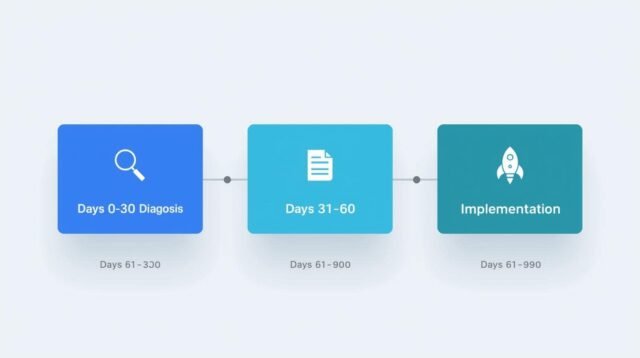
Here is a practical 90-day plan you can adapt.
Days 0–30: Visibility & Diagnosis
- Map workforce types and headcounts
- Export all CTC templates and sample pay structures
- Identify all systems and spreadsheets used for:
- Attendance & overtime
- Wage & leave registers
- Contractor and gig worker data
- Flag obvious red zones:
- Wage < 50% of CTC
- Entire categories missing from any system (e.g., contract housekeeping staff)
- Plants or offices where registers are only on paper
Deliverable:
A simple 2–3 page “Current State and Risk Map” for your CEO / CFO.
Days 31–60: Design & Decision-Making
- Finalise “model” salary structures by band/role
- Freeze an approach for handling:
- Existing employees
- New joiners
- Promotions and transfers
- Decide which registers and data sets will live in your HRMS as the master record
- Agree on vendor / contractor data requirements and timelines
- Align on budget (if system upgrades or data clean-up partners are needed)
Deliverable:
A one-page “New Labour Code Design Blueprint” with:
- Salary structure principles
- System-of-record decisions
- Data and process changes
- Target go-live dates by location / business
Days 61–90: Implementation & Communication
- Configure your HRMS (e.g., AHALTS or any modern platform) to:
- Enforce wage rules in payroll
- Capture all worker types
- Auto-generate critical registers
- Run pilot payrolls in test mode to catch issues early
- Train HRBPs, plant HR, and payroll teams on:
- New structures
- New reports and dashboards
- Roll out employee-level communication:
- FAQs on wage changes
- Timelines and what employees can expect
Deliverable:
- Go-live in at least one unit / business as a pilot
- Refined plan to roll out across remaining locations
5. What a “New Labour Code-Ready” HRMS Should Actually Do
Whether you use AHALTS HRMS or any other HRMS, this is what “New Labour Code-ready” should mean in practice.
- Wage-definition aware payroll
- Supports wage ≥ 50% of CTC configuration
- Automatically recalculates statutory components
- Alerts when a structure violates the rule
- Full workforce modelling
- Distinguishes employees, contract, gig, platform, apprentice, etc.
- Lets you apply different rules by state/role/category
- Digital statutory registers
- Registers update in real-time from HR events
- Each change is time-stamped and user-stamped
- Contractor and vendor governance
- Stores contractor details, license validity, worker lists
- Connects worker attendance with wage and muster rolls
- Compliance dashboards
- Shows where data is missing
- Highlights non-compliant structures or patterns
- Lets you quickly export what an inspector or auditor might ask for
If your current system can’t realistically get there, that’s your cue to push for either:
- A major reconfiguration, or
- A shift to a platform that can support this (AHALTS is one example, but the principle is what matters).
6. Two Quick Scenarios to Pressure-Test Your Readiness
Sometimes it’s easier to test readiness through simple “what if” stories.
Scenario A: Manufacturing Plant with Contract Labour
- n inspector visits your main plant.
- Asks for:
- Last 12 months’ wage and attendance registers
- Muster rolls for contract workers from your two largest contractors
- Proof of PF/ESI contributions for eligible workers
Can you:
- Pull all of this within 30–60 minutes from your systems?
- Show aligned data for the same worker across attendance, wage, and contractor records?
If the answer is “only if X person is in office” or “we’ll need a few days,” you’ve found a gap.
Scenario B: Tech / Services Company with Remote & Gig Workers
- A board member asks:
- “How many gig or platform workers are contributing to our delivery each month?”
- “What social security obligations do we have towards them under the new Codes?”
If not, that’s an opportunity for HR to lead a cross-functional fix across HR, procurement, legal, and vendors.
7. Final Takeaway: Clarity First, Tools Second
The New Labour Codes 2025 are a major shift. News coverage focuses on protests, take-home salary cuts, and gig worker debates—and those are important. (Reuters)
But for CHROs and HR leaders, the core questions are more operational:
- Do we understand where we are exposed?
- Do our internal structures and systems reflect the new definitions?
- Can we show, with data, that we’re doing the right thing?
If you start with clear mapping, honest diagnosis, and a simple 90-day plan, the technology side becomes much easier to solve. A good HRMS (whether AHALTS or any other) should then simply be the enabler that makes your decisions stick, at scale.
The law has moved. This is HR’s chance to show that the organisation can move with it—calmly, transparently, and intelligently.