
Introduction: The AI Shift in HRMS
By 2026, Human Resource Management Systems (HRMS) have undergone a fundamental transformation. What were once basic administrative tools designed to maintain employee records and process monthly salaries have evolved into intelligent digital platforms that actively influence business outcomes. Organizations today operate in a complex environment shaped by hybrid work models, gig employment, rapidly changing labour laws, data-driven decision-making, and rising employee expectations for transparency and accuracy.
Traditional HRMS platforms struggle to keep pace with this complexity. Manual validations, spreadsheet-based payroll checks, and rule-based attendance systems are prone to errors, delays, and compliance risks. This is where AI-powered HRMS platforms come into play.
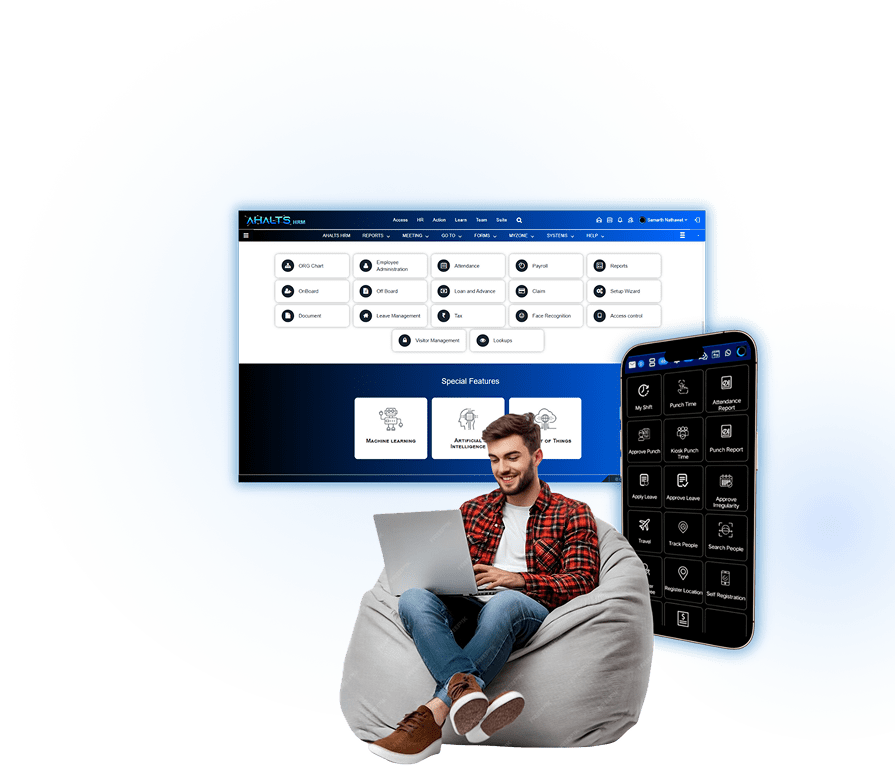
AI-powered systems such as AHALTS HRMS go beyond automation. They analyze workforce data, identify behavioral patterns, predict outcomes, and proactively guide HR and payroll decisions. Payroll and attendance, once reactive and correction-heavy processes, are now becoming predictive, self-correcting, and compliance-ready systems.
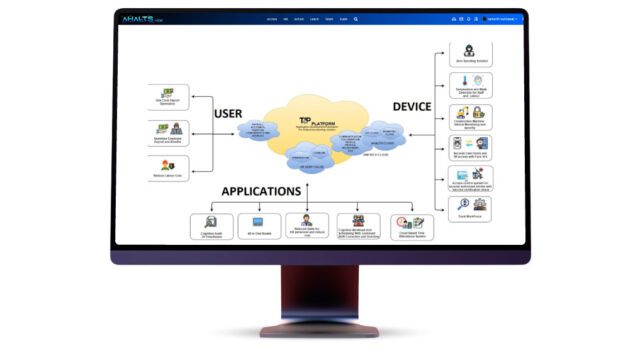
As organizations scale in 2026, AI-powered HRMS acts as the digital backbone connecting HR, finance, compliance, and leadership into a unified, intelligent workforce management ecosystem.
Evolution of HRMS: From Digitization to Intelligence
The evolution of HRMS can be understood through four distinct phases.
Phase 1: Digitization
The earliest HRMS platforms focused on digitizing paper-based records. Employee profiles, salary details, attendance registers, and statutory documents were stored digitally, improving accessibility and reducing paperwork.
Phase 2: Automation
The next phase introduced automation. Payroll calculations, leave balances, statutory deductions, and attendance summaries were auto-calculated, reducing manual effort but still requiring extensive validation and oversight.
Phase 3: Cloud & Self-Service
Cloud-based HRMS platforms enabled anytime access, mobile applications, and employee self-service. Employees could apply for leave, download payslips, and update profiles independently, improving efficiency and experience.
Phase 4: AI-Powered HRMS (HRMS 4.0)
The current phase—HRMS 4.0—is driven by artificial intelligence. Platforms like AHALTS HRMS continuously process massive volumes of workforce data to:
- Detect anomalies before they escalate
- Forecast payroll outcomes
- Predict compliance risks
- Provide actionable insights
Instead of reacting to issues after payroll processing, organizations can now prevent errors before they occur.
AI-Driven HR Workflow Automation in 2026
Automation in 2026 is no longer limited to executing repetitive tasks. AI-powered HRMS platforms enable decision automation, transforming how HR workflows operate.
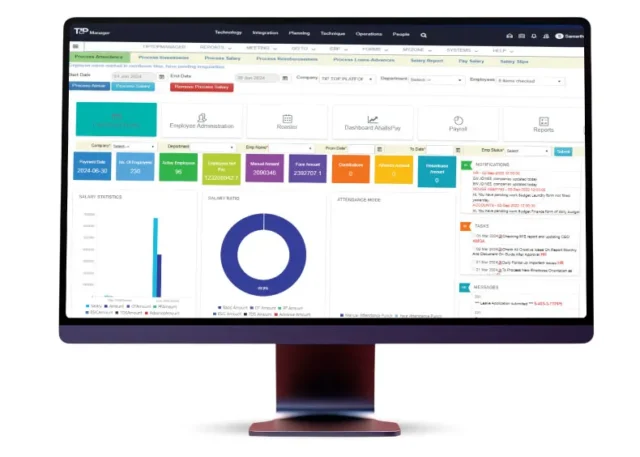
Intelligent Attendance Validation
AHALTS HRMS automatically validates attendance data using historical patterns, shift rules, and location intelligence. If an employee’s attendance deviates from normal behavior, the system flags it instantly.
Dynamic Payroll Approvals
Instead of static approval hierarchies, payroll approvals are triggered based on risk scores. Low-risk payroll cycles are auto-approved, while high-risk exceptions are escalated for review.
Exception-Driven Workflows
AI prioritizes issues that require attention, allowing HR teams to focus on anomalies rather than manually reviewing every record.
This level of Automation:
- Reduces processing time
- Minimizes human error
- Improves consistency
- Enhances compliance readiness
Predictive Payroll Calculations: Payroll That Thinks Ahead
Payroll errors are expensive—not just financially, but also in terms of employee trust and regulatory exposure. AI-powered HRMS platforms address this challenge through predictive payroll.

What Is Predictive Payroll?
Predictive payroll uses historical payroll data, attendance trends, overtime patterns, incentives, and statutory rules to forecast payroll outcomes before salary disbursement.
AHALTS HRMS analyzes:
- Previous payroll cycles
- Attendance variations
- Overtime frequency
- Wage structure changes
- Statutory thresholds
Key Benefits
- Error Prevention: Issues are detected before payroll runs
- Cost Forecasting: Finance teams gain visibility into upcoming payroll expenses
- Compliance Assurance: Payroll aligns with labour laws before execution
- Employee Trust: Fewer disputes and corrections
By 2026, predictive payroll has become a competitive advantage for organizations aiming for financial discipline and workforce transparency.
AI-Based Attendance Intelligence & Anomaly Detection
Attendance management has become significantly more complex due to:
- Remote work
- Hybrid schedules
- Field employees
- Flexible shifts
- Gig workers
Traditional attendance systems struggle in such environments.
How AI Changes Attendance Tracking
Instead of relying on rigid rules, AI in AHALTS HRMS learns what “normal” attendance behavior looks like for individuals, teams, and roles.
Anomalies Detected by AI
- Excessive or unusual overtime
- Repeated late logins
- Geo-location mismatches
- Buddy punching patterns
- Inconsistent work hours
These anomalies are flagged in real time, long before payroll processing begins.
Impact on Payroll & Compliance
- Prevents wage leakage
- Ensures accurate overtime calculation
- Reduces labour law violations
- Strengthens audit readiness
Smart Rule-Based Compliance Automation
Compliance is one of the biggest challenges for HR and payroll teams. Labour laws, wage codes, and statutory regulations change frequently, making manual tracking risky.
AI-Driven Compliance Engine
AHALTS HRMS incorporates a smart compliance engine that:
- Automatically updates payroll rules
- Adjusts attendance validations
- Applies statutory thresholds dynamically
Always Audit-Ready
The system maintains:
- Digital attendance registers
- Payroll audit trails
- Time-stamped compliance reports
This ensures organizations remain inspection-ready at all times, reducing legal exposure and operational stress.
Data Security, Ethics & Trust in AI-Powered HRMS
As AI takes on greater responsibility, trust becomes critical.
Enterprise-Grade Security
AHALTS HRMS implements:
- Encrypted data storage
- Role-based access control
- Multi-factor authentication
- Detailed audit logs
Ethical AI Practices
- Transparent decision logic
- Explainable payroll outcomes
- Fair treatment across employee categories
Employees gain confidence that payroll and attendance decisions are accurate, unbiased, and traceable.
Business Impact of AI-Powered HRMS
Organizations adopting AI-powered HRMS platforms experience measurable benefits:
- Faster payroll cycles
- Reduced compliance risk
- Lower administrative workload
- Improved workforce visibility
- Higher employee satisfaction
HR teams transition from operational roles to strategic partners, using insights generated by AHALTS HRMS to support workforce planning and business growth.
The Future of HRMS Beyond 2026
Beyond 2026, AI-powered HRMS platforms will evolve into full workforce intelligence systems, integrating:
- Predictive workforce planning
- Attrition forecasting
- Performance-linked payroll
- Personalized employee experiences
AHALTS HRMS is designed with scalability and adaptability at its core, ensuring organizations remain future-ready.
Conclusion
AI-powered HRMS is no longer a future concept—it is the operational standard for modern enterprises.
By combining:
- Predictive payroll calculations
- Intelligent attendance analytics
- Smart rule-based compliance automation
AHALTS HRMS empowers organizations to operate with accuracy, agility, and confidence in 2026 and beyond.