

Cutting hours is easy. Optimising them protects service while the wage line comes down. Here is how AHALTS does it, in five steps.
The month-end review has a script. The wage percentage is up a point and a half, someone senior says control, and by the next week shifts are trimmed and everyone is sent home on the minute. Next month the wage line looks better. Turndown runs late, the breakfast queue is longer, and two good stewards have taken jobs down the road.
Nobody managed badly. They managed the one number they were shown.
Reducing wage spend and optimising it are different jobs. Any new manager can reduce it: roster fewer people and never allow a minute of overtime. Optimising puts the right person in the right place at the right time, and it pays out four ways. Wage cost falls, guests get better service, staff are happier because the schedule is finished on time and stops changing, and better service and happier staff bring in more revenue. Here is how AHALTS does it, limited to what we can show you on screen.
Same saving, opposite result
Take a housekeeping department on a heavy check-out day. The roster offers 120 hours against the 112 the work needs. Here are two ways to remove the extra eight. The figures are invented; the arithmetic is the point.
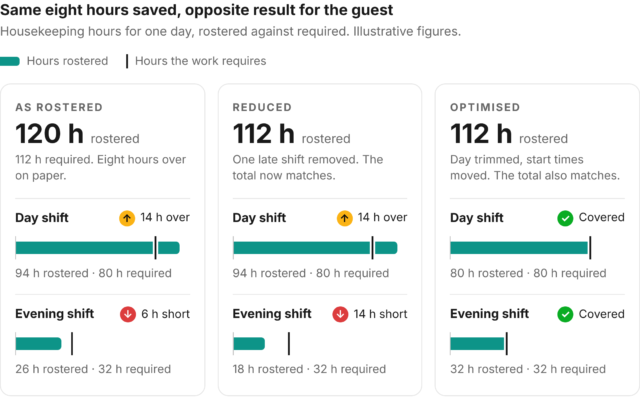
Both rosters save eight hours and hit the same wage figure. Only one still turns down the rooms.
The quick cut takes a person off the late shift. The totals match, but the evening goes from six hours short to fourteen, and turndown fails. The optimised roster trims the over-staffed day shift and moves six hours to the evening. Same saving, opposite result for the guest, and the wage percentage can’t tell them apart. You only see the difference when you set hours rostered against hours required, shift by shift. That comparison is where AHALTS starts.
How AHALTS does it:
1. It works out the hours from the work
Work is broken into activities, each tagged with the grade of person it needs. The Workload Balancer in ARC computes the hours required against the hours available, and matches employee grade to task grade. That means no supervisor doing a room attendant’s work, and no roster copied forward from last week. It looks ahead too: the Route Map in ARC pulls arrivals and occupancy from your PMS to forecast the load before the day arrives.
2. It puts the roster on the employee’s phone
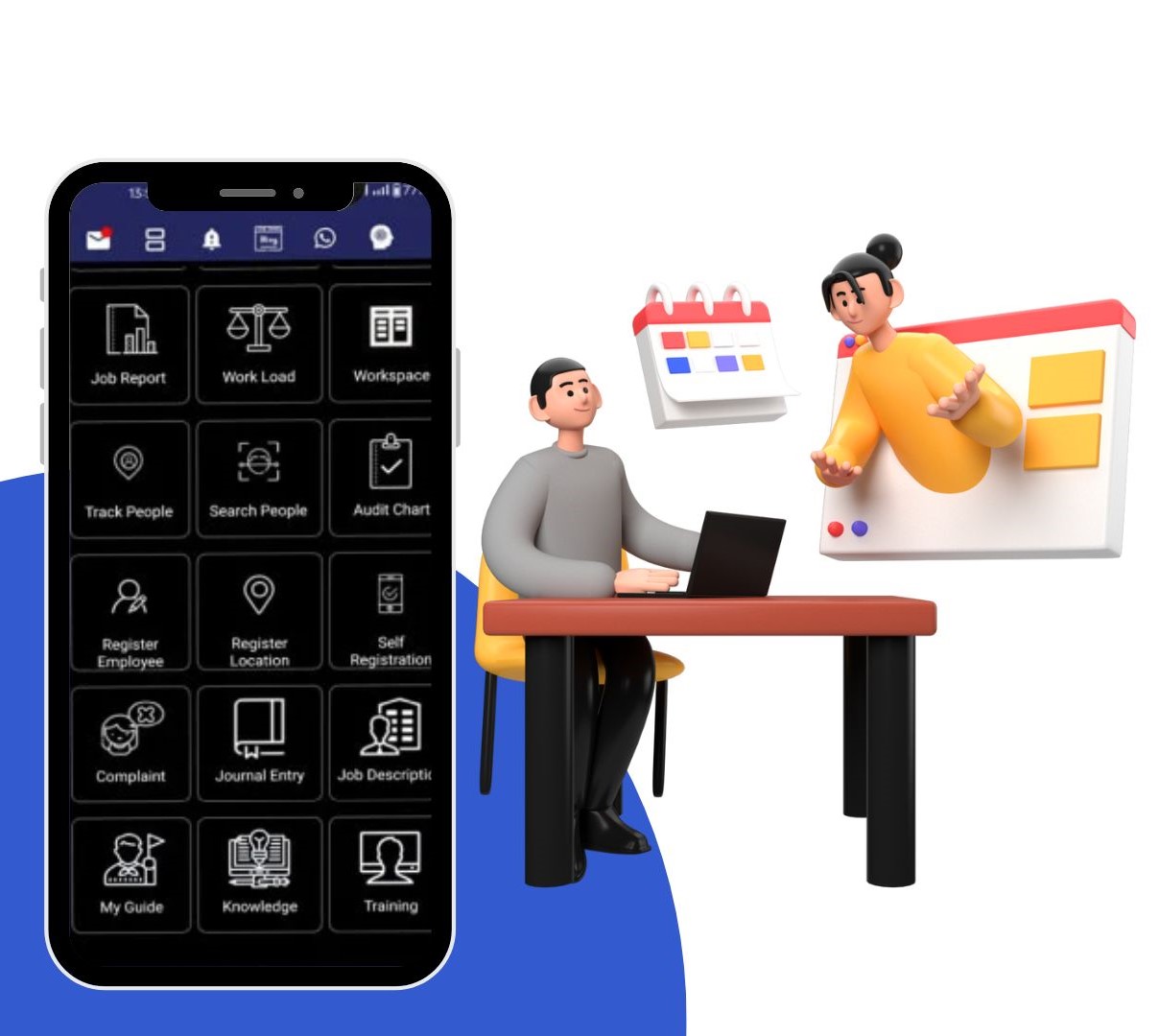
Shifts are set up to suit the property. Staff check their shift, assigned work, leave and payslip in the TipTopPeople app, and managers can switch a shift from the same app. A roster people can plan around is one they stay for.
3. It audits every hour before it is paid
Staff clock in by face recognition, geofenced mobile punch, NFC, RFID, biometric device or web. The Cognitive Punch Audit checks each punch against location, time and shift, and only audited time flows to payroll. With task-based checkout, the question at the end of a shift becomes was the work done? rather than did they leave on time? Overtime now costs at least double under the Code on Wages, so the aim is to plan it and see every unplanned hour, not to ban it.
4. It sends problems to the person who owns them
Attendance feeds a live dashboard, with notifications for absentees, late logins and early exits. When a measure crosses its threshold, ARC sends the alert to the person responsible, early enough to act on a workload mismatch or a week that isn’t filling as forecast. If you switch it on, Cognitive Scheduling changes the roster itself. Either way, nobody has to wait for the P&L to find out.
5. It keeps everything on one scorecard
ARC’s balanced scorecard puts the financial, customer, internal-process and learning numbers on one page, and the report pack builds itself in PowerPoint, Word and Excel. Finance, operations and HR argue about the decision, not about whose spreadsheet is right.
In a live hotel
At a luxury heritage hotel running AHALTS, these were ARC’s results in its first 30 days:
| 42 → 80 | General manager’s morning-operations score |
| ~95% | Manager reporting discipline, against a typical 75–85 per cent |
| Up to 30% | of payroll adjustments exposed as manual punch corrections |
| 1 | hidden sales-pacing shortfall caught early and recovered |
Notice that none of these is a wage percentage.
What it does not do
- It doesn’t replace the weekly labour meeting. It gives that meeting one page to work from.
- It doesn’t turn thirty days into a guarantee. The figures above are early results from one hotel.
A two-minute check for your hotel
- Is each department given a target for hours, by day, built from the week’s forecast?
- Do shift start times follow the guest flow, or are they the same every week?
- Do managers see labour numbers every day, or first in the month-end P&L?
- Do finance, operations and HR review labour together every week?
Two or more “no” answers is where the money is. Fix the process first. AHALTS then keeps it in place on the busy weeks, when the only number left on the table is the wage line.
| See all five on screen
The Workload Balancer, a shift on an employee’s phone, an audited day, an alert reaching its owner and the scorecard, in one sitting. Request a walkthrough: www.ahalts.com/contact/ Or read how ARC by AHALTS works: www.ahalts.com/ahalts_arc_product_page.html |
Frequently asked questions
What is the difference between reducing and optimising hotel wage spend?
Reducing lowers paid hours. Optimising matches hours, and the grade of the people working them, to the work that needs doing, so wage cost, service and staff experience improve together.
Does AHALTS forecast the staffing load?
Yes. The Route Map in ARC forecasts future load by pulling arrival and occupancy data from the hotel’s PMS, so the hours required are known ahead of the day.
Can AHALTS change rosters automatically?
Yes, if you switch it on. With automatic changes enabled, Cognitive Scheduling rebalances the roster itself. With it off, ARC alerts the manager responsible and the manager decides.
About this article. Published by AHALTS Lab. The housekeeping example uses invented figures. The Code on Wages reference is a summary, not legal advice.
Learn more at ahalts.com · Contact the team